Buying your first RC helicopter? Start with a gyro-stabilised coaxial or fixed-pitch model under £150, learn to hold a hover, and move up from there. If you already fly, the 450 and 500-class scale machines are where the hobby gets serious. We stock radio controlled helicopters across the whole of that range, from indoor micros to 700-class scale ships, with UK pricing that includes VAT.
How the sizes work. The class number is shorthand for the airframe. A 250-size model is a garden and sports-hall machine. The 450 class, around 700mm, is the usual starting point for proper scale flying: light enough that mistakes are survivable, and the best supported for spares. The 500 class at roughly 990mm is the sweet spot, heavy enough to sit steady in a breeze and large enough to look like a real aircraft at distance. The 700 and 800 sizes are serious machines for experienced pilots, usually supplied as kits so you choose your own electronics.
How much help do you want from the electronics? This matters more than size. A modern GPS flight controller will hold a remote control helicopter in a fixed position with no stick input, bring it home at the push of a button, and return it automatically if the signal drops or the battery runs low. It turns a machine that once demanded constant attention into something a careful beginner can learn on. Collective-pitch models without that assistance are still the most demanding discipline in the hobby.
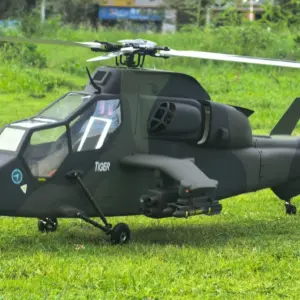
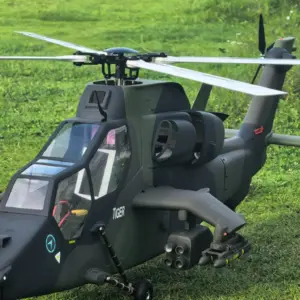
What we stock. Scale helicopters from FLISHRC, Flywing and Roban, plus beginner models, spares and flight packs. Everything ready to fly is bound and tested before dispatch. Building instead? You will want servos, LiPo flight packs and a multi-channel transmitter. If you are weighing up models, our scale helicopter buying guide compares the range by size and price.
📋 All Products 112
-
RC Helicopters
-
RC Helicopters
-
RC Helicopters
-
RC Helicopters rtf
-
RC Helicopters
-
RC Helicopters
-
RC Helicopters rtf
-
RC Helicopters
-
RC Helicopters
-
RC Helicopters rtf
-
RC Helicopters
-
RC Helicopters
-
RC Helicopters rtf
-
RC Helicopters
-
RC Helicopters rtf
-
RC Helicopters
-
RC Helicopters rtf
-
RC Helicopters
-
RC Helicopters
-
RC Helicopters rtf
-
RC Helicopters
-
RC Helicopters rtf
-
RC Helicopters
















Frequently Asked Questions
It's the most technically demanding discipline in the RC hobby, but modern stabilised beginner helicopters (like 6-axis gyro micros) are genuinely easy to hover on day one. Collective-pitch and 3D helicopters take weeks to months of practice to fly confidently.
A coaxial helicopter (two counter-rotating main rotors) or a 4-channel fixed-pitch heli with a gyro is the right starter. Both are self-stabilising, forgiving on small crashes, and cheap to repair. Avoid single-rotor collective-pitch models until you've logged 20+ hours of hovering.
Typical flight time is 6–10 minutes on a single LiPo pack for electric helis. Larger scale electric helis manage 8–12 minutes. Fuel-powered nitro and turbine helis run 10–15 minutes. Most pilots carry 3–5 batteries per session.
Micro coaxial helicopters (under 200mm rotor diameter) are designed for indoor flying. Anything larger needs a sports hall, a garden or an RC club field. Always check downwash clearance and keep clear of pets and ceilings.
Coaxial helis have two stacked rotors that cancel torque, making them extremely stable but slow. Fixed-pitch single-rotor helis are faster and more agile. Collective-pitch helis (the top of the range) change blade angle in flight to perform 3D aerobatics.
If you have not flown before, buy small: a 250-size stabilised model flies in a garden or a sports hall and costs little to repair. Once you can hold a hover, the 450 class is the usual next step. The 500 class is the most popular scale size because it sits steadily in a light wind and still fits in a car, and the 700 and 800 sizes are for experienced pilots with the space to match.
Under £150 buys a stabilised model to learn the sticks on. Around £600 to £750 buys a 450-class scale machine with GPS assistance, which is where most people should start if they are serious. From £1,250 you are into the 500 class with fibreglass fuselages and far better stability in wind. Above £2,000 you are buying large airframes you build yourself.
A GPS flight controller holds the helicopter in a fixed three-dimensional position when you let go of the sticks, returns it to you at the push of a button, and brings it home by itself if the transmitter signal drops or the pack runs low. It removes most of the risk from learning and is the single biggest reason scale helicopters are more approachable than they were ten years ago.