
Best RC Cars for an 11 Year Old — UK Buyer’s Guide 2026
Eleven is a genuine turning point. Most children this age have outgrown the toy-grade RC cars covered in our age-by-age kids’ RC guide and are ready for something with real hobby-grade bones: proper suspension, a metal gearbox, and the option of brushless power when they want more speed. The models below are chosen because they’re robust enough to survive an eleven-year-old’s learning curve, but still have headroom to grow into as skills improve.
Scale matters more than it first appears — a 1/12 car behaves very differently to a 1/16, and our scales explained guide is worth five minutes before you buy. It’s also worth knowing upfront that the car itself is rarely the full cost of the hobby — see our guide to batteries, chargers and spares so there are no surprises after Christmas or a birthday.
Best RC cars for an 11 year old — at a glance
| Model | Best for | Type | Price |
|---|---|---|---|
| WLToys 124018 V2 | A tough, forgiving first hobby-grade car | 1/12 brushed buggy | £96.99 |
| MJX Hyper Go H16E | Gadget-minded kids who like app telemetry | 1/16 brushless truck | £89.99 |
| MJX Hyper Go 14304 | A first taste of drift driving | 1/14 brushless drift car | £99.99 |
| Rlaarlo XTS-P12 (Red) | A confident step up to metal-chassis brushless | 1/12 brushless rally car | £149.99 |
| Rlaarlo XTS-P12 (Blue) | Same capability, colour choice | 1/12 brushless rally car | £149.99 |
| ZD Racing RX12 | The most advanced and quickest car here | 1/12 brushless drift & rally car | £119.99 |
1. WLToys 124018 V2 — best for a tough first hobby-grade car
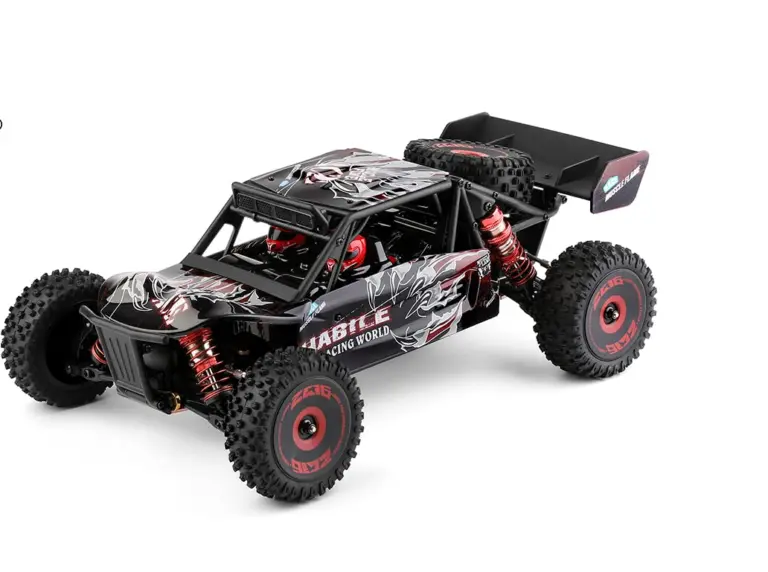
A brushed motor is a sensible place to start at 11, even for a confident child. Power delivery is more progressive than brushless, which makes it easier to learn throttle control before chasing outright speed. The 124018 V2’s 1/12 buggy chassis is a practical, well-proven size — big enough to feel substantial, small enough to still fit in a boot or under a bed.
Best for: an eleven-year-old building core driving skills on a durable, easily serviced buggy. Watch out for: brushed motors wear and lose punch over time, so budget for a replacement motor eventually if they drive it hard.
2. MJX Hyper Go H16E — best for app-connected telemetry
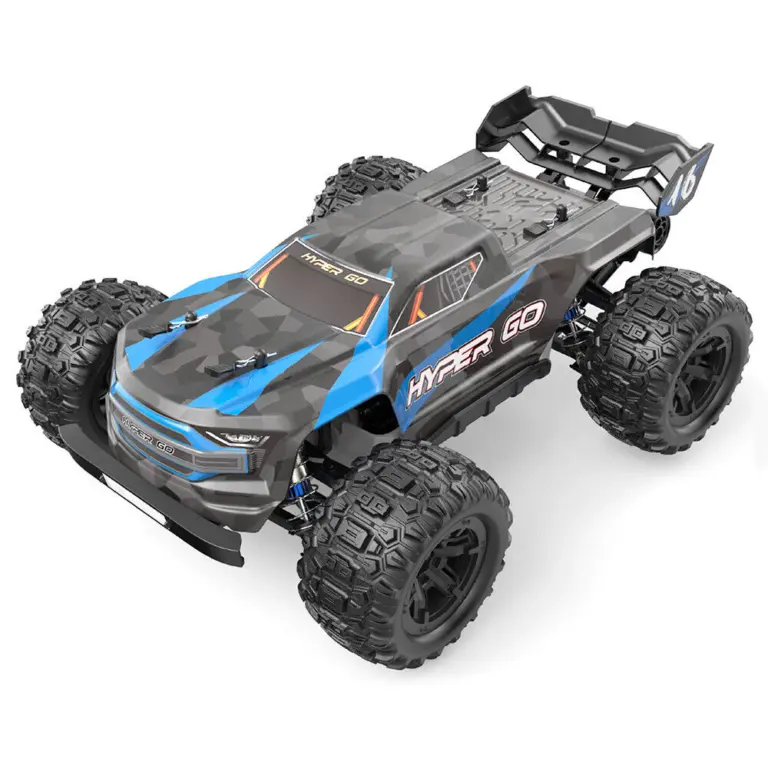
MJX Hyper Go H16E 1:16th Scale Truck with GPS Speedometer + Mobile App
1/16 brushless truck, GPS speed app
£89.99
View productThis one earns its place through the app-based GPS speedometer, which is a genuinely good fit for an eleven-year-old’s mindset — it turns every run into a score to beat, which naturally encourages smoother, more deliberate driving rather than flat-out throttle. Being 1/16 scale and brushless, it’s nippier than the buggy above but still compact and easy to control in a park or garden.
Best for: kids who enjoy data and competing against their own best times. Watch out for: the smaller 1/16 scale means less ground clearance than a 1/12 car, so it’s happiest on reasonably smooth surfaces.
3. MJX Hyper Go 14304 — best first drift car
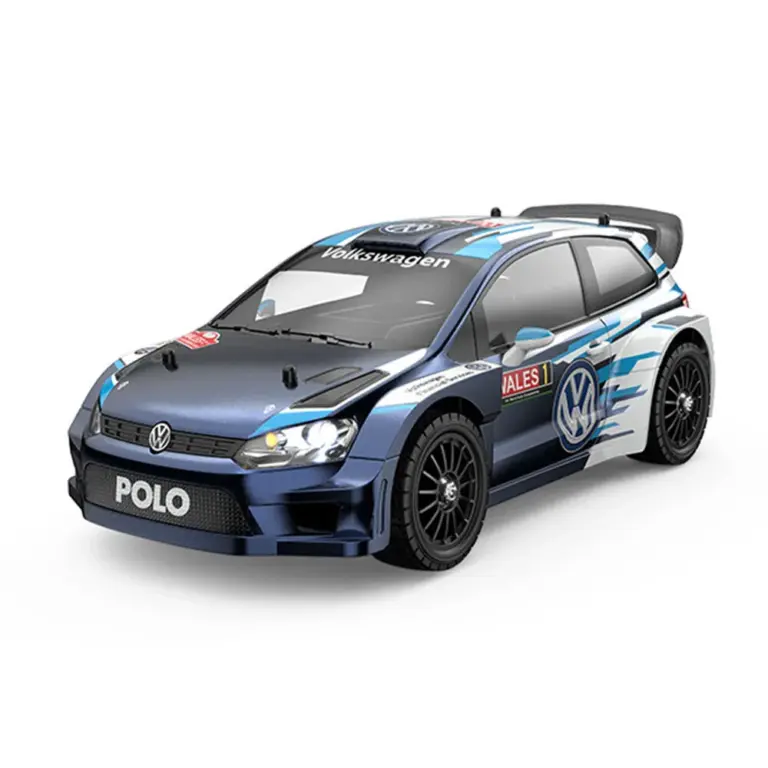
MJX Hyper Go 14304 Brushless Drift Car – 1/14 Scale, 67km/h Speed
1/14 brushless drift car, up to 67km/h
£99.99
View productDrift cars are a slightly different skill set to buggies — low-grip tyres mean the back end slides around corners, which is great fun once a child has a feel for throttle and steering. It’s brushless, so there’s real pace on tap (67km/h claimed top speed), but that figure is best treated as a ceiling to grow into rather than a starting point.
Best for: a child who’s already had a basic brushed car and wants a new challenge. Watch out for: that top speed is only sensible on a large, flat, obstacle-free surface with supervision — not pavements or driveways with traffic nearby.
4. Rlaarlo XTS-P12 (Red) — best step up to metal-chassis brushless
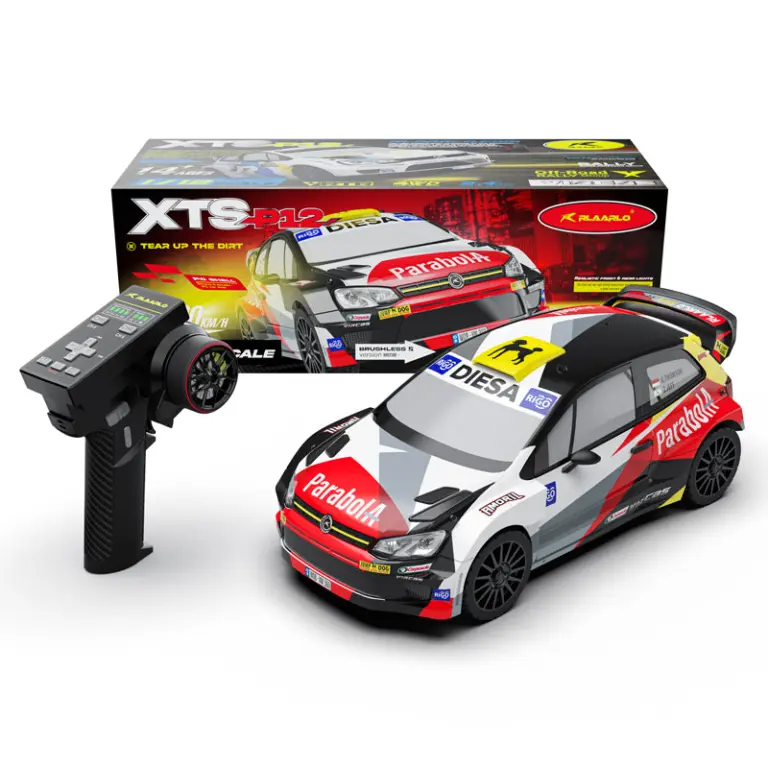
Rlaarlo XTS-P12 RC Rally car 1/12 Metal Brushless 4WD RTR – Red
1/12 metal-chassis 4WD brushless rally car
£149.99
View productThis is where the hobby starts to feel properly serious. A metal chassis on a 1/12 brushless rally car means it can take a lot more knocks than a plastic-framed toy-grade model, and 4WD gives it the traction to put that brushless power down on loose surfaces rather than just spinning the wheels. It’s a car that rewards improving skill rather than punishing a shaky start.
Best for: an eleven-year-old who’s outgrown brushed power and wants a car built to last several seasons. Watch out for: the metal chassis adds weight and cost versus plastic rivals, but it’s the trade-off that gives this car its durability.
5. Rlaarlo XTS-P12 (Blue) — same car, a colour choice
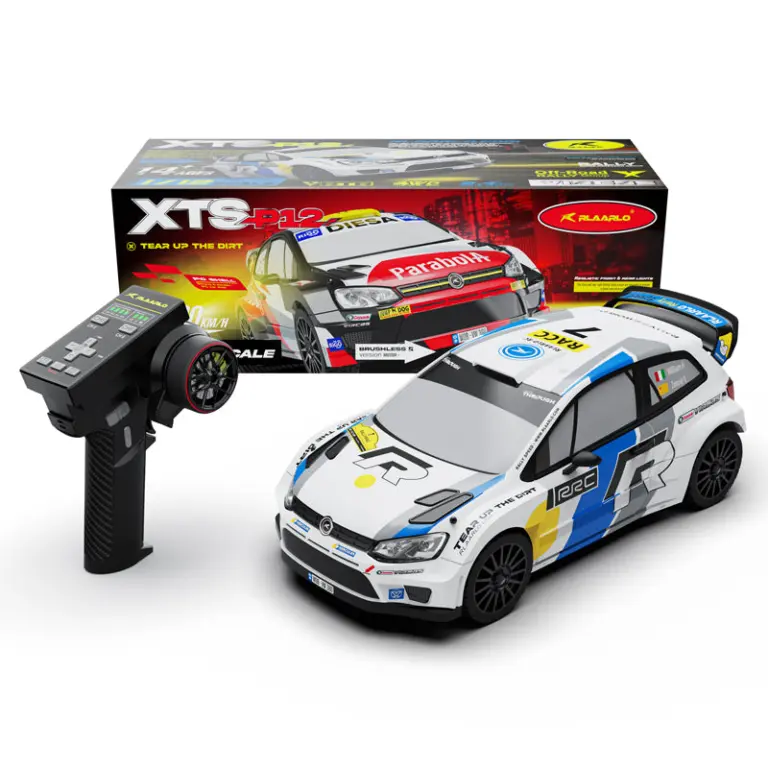
Rlaarlo XTS-P12 RC Rally car 1/12 Metal Brushless 4WD RTR – Blue
1/12 metal-chassis 4WD brushless rally car
£149.99
View productMechanically identical to the red version above, this is simply here for families where colour preference matters — and at 11, it often does. Same metal chassis, same 4WD brushless layout, same growing-room for a developing driver.
Best for: anyone sold on the XTS-P12 above but wanting a different finish. Watch out for: pricing between the two colours can shift slightly, so it’s worth checking both before deciding.
6. ZD Racing RX12 — best for the most confident, speed-ready 11 year old

ZD Racing RX12 RTR 1/12 4WD Brushless Drift & Rally Car (3S Ready, up to 80 km/h)
1/12 4WD brushless, 3S ready, up to 80km/h
£119.99
View productThis is the car in this guide with the most headroom. 3S battery readiness and a claimed 80km/h ceiling put it firmly in hobbyist territory — it’s genuinely fast, and it’s the sort of car an experienced eleven-year-old can still be learning new things on at thirteen or fourteen. We’d suggest running it on its standard 2S setup to begin with and treating 3S as a later upgrade, not a day-one setting.
Best for: an eleven-year-old who already has solid stick control and parental supervision for faster runs. Watch out for: that top speed figure is a 3S maximum — always start on 2S, and only move to 3S once it’s clearly within their control.
What to look for
Chassis material and build quality matter more at this age than headline speed. A metal or reinforced chassis survives the inevitable crashes far better than a budget plastic frame, which keeps the car running for longer without constant repairs.
Battery type is worth understanding before you buy, since it affects runtime, charging and how the car performs — our LiPo vs NiMH guide explains the practical differences in plain terms.
Scale and 2WD/4WD affect how a car handles. 1/12 scale 4WD cars tend to be more stable and forgiving on loose surfaces than smaller 1/16 or 1/18 2WD models, which is useful while a child is still learning throttle control.
Growing room is the key difference between a toy-grade and a hobby-grade car. Brushless motors, replaceable parts and 3S-ready electronics mean a car bought at 11 can still be interesting — and upgradeable — a couple of years later, rather than being outgrown within a season.
Frequently asked questions
Is 11 old enough for a brushless RC car?
Should I buy brushed or brushless for an 11 year old?
What safety gear or rules should apply?
Do these cars need extra batteries or tools?
For more age-specific picks, browse all our RC buying guides, and if a car you already own is misbehaving, our free RC car diagnostics tool can help narrow down the fault before you buy parts.