
Best RC Cars for a 7 Year Old — UK Buyer’s Guide 2026
Seven is a brilliant age to move on from a toy-shop remote control car to something a bit more “proper”. A seven year old has the hand-eye coordination to manage separate throttle and steering controls, but they’re still learning — which means crashes, kerbs and the odd trip into a flowerbed are part of the deal. The models below are chosen because they’re forgiving of all that, not because they’re the fastest or flashiest things we sell.
If you’re buying for a different age, our RC car by age guide breaks down what’s appropriate from toddlers through to teens. It’s also worth a quick read of our scales explained guide so you know what “1/16” or “1/24” actually means for size, and our piece on the hidden costs of batteries, chargers and spares before you commit to a gift budget.
…at a glance
| Model | Best for | Type | Price |
|---|---|---|---|
| PINECONE FOREST SG 2410 Fiesta Rally | First ever RC car, tight budget | 1/24 RTR rally car | £33.99 |
| WL Toys 284161 micro buggy | Small hands, indoor/outdoor use | 1/28 micro buggy | £44.99 |
| WLtoys 284010 mini drift car | Sideways fun, low-speed practice | 1/28 drift car | £41.99 |
| SCY-16201 PRO 4wd buggy | Stepping up after the basics | 1/16 4wd buggy | £54.99 |
| SCY 16103 Pro 4wd buggy | Confident kids, garden/park driving | 1/16 4wd buggy | £89.99 |
| MJX HYPER GO 16207 | Growing into — adult supervision | 1/16 3S brushless, 45km/h | £99.99 |
1. PINECONE FOREST SG 2410 Fiesta Rally car — best for a first ever RC car

PINECONE FOREST SG 2410 Fiesta Rally car RTR 1/24 2.4G 2WD RC Car
1/24 scale, 2WD, RTR, 2.4GHz
£33.99
View productAt 1/24 scale this is a genuinely small car, which suits a seven year old’s size and strength better than it sounds — small cars are easier to see, easier to retrieve from under the sofa, and gentler when they clip a skirting board. It’s rear-wheel drive and modestly geared, so steering control comes before speed, which is exactly the right order for a first RC car.
Best for: the very first “real” RC car, or a stocking-filler-sized gift that doesn’t feel like a toy. Watch out for: 2WD cars can struggle on deep carpet pile or loose gravel — it’s happiest on hard floors, paths and short grass.
2. WL Toys 284161 micro buggy — best for small hands and tight spaces
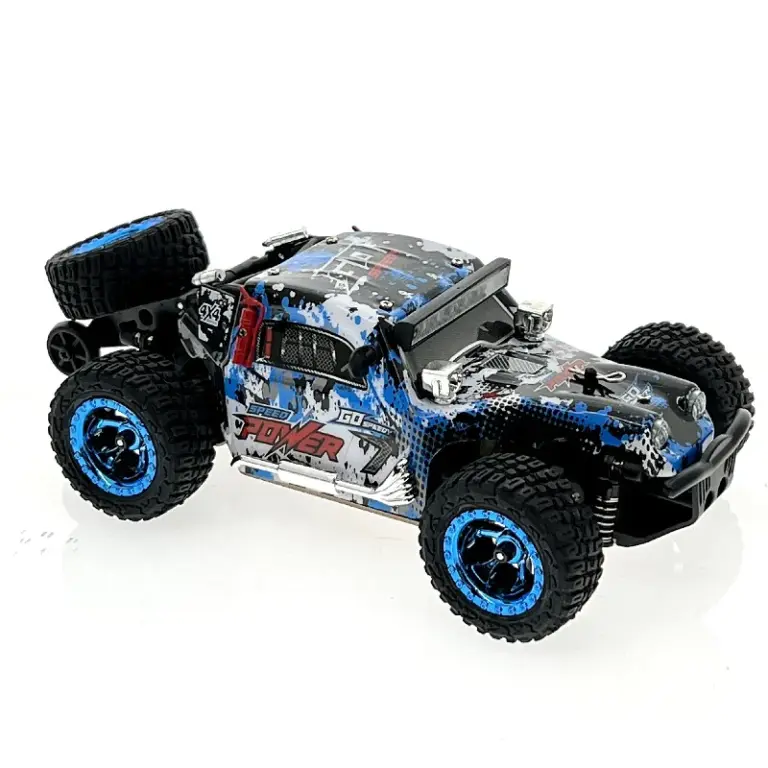
The 1/28 scale makes this one of the smallest proper RC buggies we stock, which means it’s usable in a living room, hallway or small garden without needing acres of space to learn in. Its compact wheelbase also means it’s naturally slower in real terms than it feels, which is reassuring for nervous first-timers and parents alike.
Best for: flats, smaller gardens, or kids who’ll mostly drive indoors. Watch out for: as with any micro-scale car, parts are correspondingly small and fiddly — keep spares somewhere an adult handles the fitting, not the child.
3. WLtoys 284010 mini drift car — best for low-speed steering practice
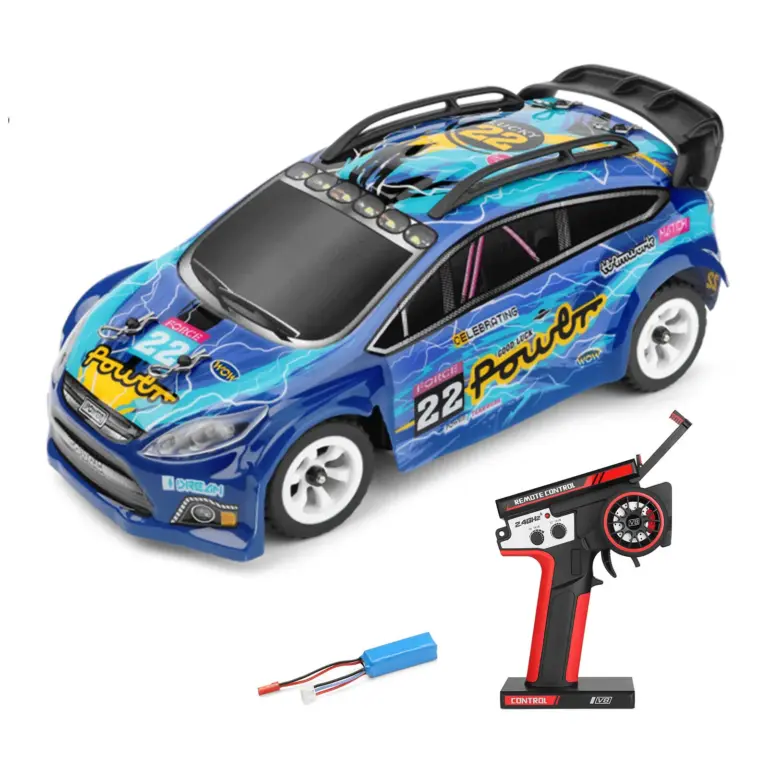
Drift cars run on deliberately low-grip tyres, which sounds odd for a beginner but actually works in a seven year old’s favour: the back end slides before speed builds dangerously, teaching throttle-and-steering coordination at a pace the car itself enforces. It’s genuinely more about learning control than going fast, which makes it a good companion to a straight-line buggy.
Best for: hard, smooth floors — hallways, driveways, garages — where the slide actually works. Watch out for: it won’t perform well on grass or carpet, so manage expectations if your drive time is mostly outdoors.
4. SCY-16201 PRO 4wd buggy — best for stepping up after the basics

SCY-16201 PRO 2.4G 1:16 electric 4wd RC racing buggy off-road (YELLOW)
1/16 scale, 4WD, off-road buggy
£54.99
View productOnce a child’s comfortable with a smaller car, stepping up to this 1/16 4WD buggy adds proper off-road capability without a huge jump in speed or complexity. The four-wheel drive copes with grass and gravel far better than the 2WD entry models, which opens up actual gardens and parks rather than just paths.
Best for: a confident beginner who’s outgrown an entry-level car but doesn’t need anything fast yet. Watch out for: it’s a noticeable step up in size from a micro buggy, so check it’ll still fit the storage and transport you’ve got planned.
5. SCY 16103 Pro 4wd buggy — best for the garden or local park

A more capable chassis than the 16201 PRO, with sturdier suspension and components built to take repeated knocks rather than just survive the occasional one. For a seven year old who’s already shown they can handle a buggy and wants something that’ll shrug off a season of garden and park driving, this is a sensible next tier rather than an impulse upgrade.
Best for: kids who’ve already had an RC car and are ready for something tougher and quicker. Watch out for: it’s capable enough that an adult should still be nearby during the first few outings until road sense and reaction times catch up.
6. MJX HYPER GO 16207 — best for growing into, with supervision
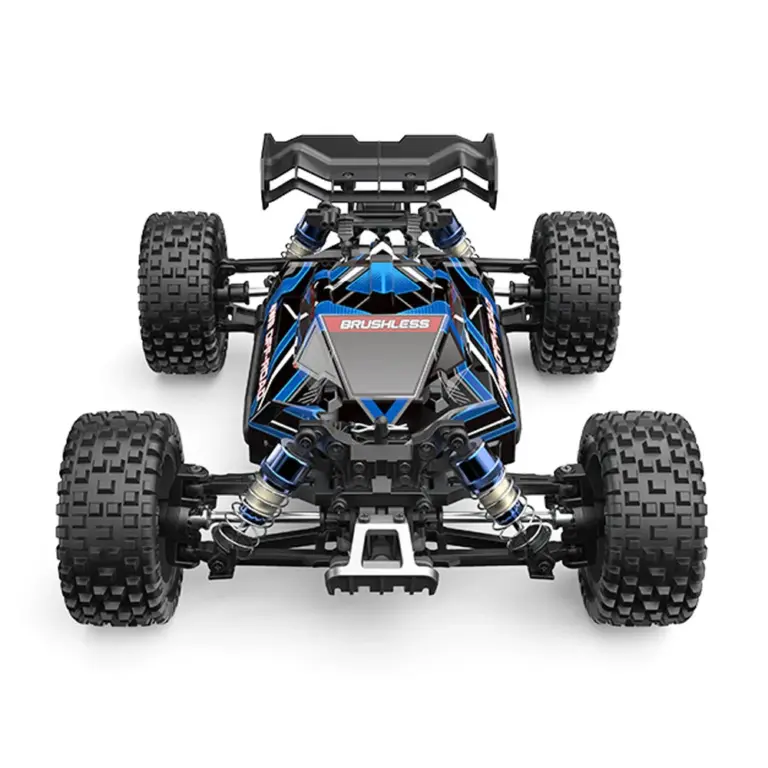
MJX HYPER GO 16207 3S 1/16 Brushless High Speed RC Car Vechile Models 45km/h
1/16 scale, 3S brushless, up to 45km/h
£99.99
View productWe’ll be straight with you: 45km/h is genuinely quick for a 1/16 scale car and not something to hand a seven year old without supervision. It’s included here as the “growing into” option — a brushless car with proper build quality that can be run on a lower power setting or throttle limiter while they’re learning, and still has serious headroom for when they’re older and more capable.
Best for: a longer-term buy a confident seven year old can grow into over a couple of years, always under adult supervision at full speed. Watch out for: at this price and speed, treat it as a shared/supervised car rather than one handed over unattended — and budget for a decent 3S LiPo and charger if one isn’t already included.
What to look for
Speed should be secondary to control. A genuinely fast car isn’t a better gift for a seven year old — it’s a harder one to manage, and crashes at speed cost more in broken parts. Look for models that are described as entry-level or beginner-friendly rather than racing-spec.
Replaceable parts matter more than you’d think. A snapped wishbone or stripped gear shouldn’t mean the end of the car. Cheaper, simpler models tend to have cheaper, more available spares too, which keeps the whole hobby affordable while they’re still learning to drive.
Battery type affects both runtime and risk. Most of these use standard RC battery packs rather than household batteries, so it’s worth understanding the difference — our LiPo vs NiMH guide explains which is more forgiving for a child’s first car and what charging routine to set up.
Size dictates where it can actually be driven. A 1/28 micro buggy suits a hallway or small garden; a 1/16 4WD buggy wants a park or a decent-sized garden. Match the scale to the space you’ve actually got, not the space you’d like to have.
Frequently asked questions
Is seven old enough for a “real” RC car?
Do I need to supervise every drive?
What happens when a part breaks?
Should I buy the fastest car I can afford?
For other ages and stages, see our full RC buying guides. And if a car you already own starts misbehaving, our free RC car diagnostics tool can help work out what’s wrong before you buy replacement parts.