
Nitro vs electric RC cars — which is right for you in 2026?
Nitro or electric? It’s the first big fork in the RC car hobby, and the one new buyers most often get wrong. Five years ago it was a genuinely close decision. Today, for most drivers, it isn’t — but there are still specific cases where a nitro car is the right call, and the reasons are worth understanding before you spend a few hundred pounds on the wrong one.
This guide is for anyone comparing the two, or anyone who’s heard “nitro is the real RC” from an older hobbyist and wants to know whether that still holds.
The short version
- Electric is quieter, simpler, cheaper over time, faster off the shelf, and what almost every current competitive race class requires. Buy electric as your first car.
- Nitro is louder, smells of the real thing, rewards tinkering, looks and sounds like a scaled-down race car, and is the correct choice if you love the mechanical side of the hobby. Don’t buy nitro as your first car.
That’s the elevator pitch. If you’re comparing specific models, the detail matters — so here it is.
Performance: modern electric wins on paper, nitro wins on feel
A decade ago, nitro was unambiguously faster. Today, mid-range brushless 1:8 and 1:10 electric cars match or exceed what similarly-priced nitro cars do in a straight line. Runtime is now similar too — modern high-capacity LiPo batteries get you 15-25 minutes per charge, and nitro gets you 15-20 minutes per tank of fuel.
Where nitro still has an edge is the sound, smell and response character. A nitro engine has a throttle response and exhaust note that no electric motor replicates. For drivers who grew up on real internal combustion engines and want a scaled-down version of that experience, electric will always feel slightly clinical. For drivers who just want to go fast, electric feels more direct — no throttle lag, no clutch slip, and it works from the first pull of the trigger.
Top speed
A modern brushless 1:8 RTR will hit 60+ mph off the shelf; gear and battery upgrades take you past 80. A nitro 1:8 buggy with a well-tuned .21 engine hits similar numbers. The practical difference is usability — the electric gets there from a standing start, the nitro needs a few seconds to wind up.
Acceleration
Electric wins. Brushless motors deliver peak torque instantly. Nitro engines need to build up revs.
Runtime
Roughly level. A 6S LiPo on a 1:8 buggy does 15-20 minutes of normal driving; a 75cc fuel tank does 15-20 minutes on a tuned .21 engine.
Handling
Nearly identical at the same price point — the chassis, suspension and tyres determine handling far more than the powertrain does.
Running costs: electric is 60-80% cheaper over a year
This is where the decision really gets made for most buyers.
Electric
- Battery: £40-£90 per pack. A pack lasts 250-400 charge cycles (1-3 years for most drivers).
- Charger: £50-£150 one-off.
- Per-session consumables: effectively zero. Tyres wear, but that’s scale-independent.
- Typical year-one running cost after the car: £100-£200 if you buy two batteries and a decent charger.
Nitro
- Fuel: ~£40 per quart, and a 1:8 buggy gets through 1-2 quarts per session. Call it £15-£30 per afternoon.
- Glow plugs: £6-£10 each, you’ll get through a few per year.
- Air filter oil, after-run oil, clutch cleaner: £30-£40 annually.
- Tuning sessions: time and fuel, not money, but it’s a non-trivial part of ownership.
- Typical year-one running cost after the car: £250-£500 depending on how often you run.
Over three years of monthly use, a nitro car costs £600-£1,500 in consumables on top of the purchase price. An electric setup with three batteries and a charger costs £250 in extras and maybe one battery replacement over the same period.
Maintenance and reliability
An electric RC car needs basically nothing between sessions: charge the battery, check the tyres, clean the dust off the chassis. If something breaks, it’s usually a gear, a shock or a shock tower — predictable wear items.
A nitro car has a combustion engine that demands attention:
- Air filter oil before every session.
- After-run oil when you’re finished to stop corrosion.
- Glow plug inspection every 5-10 tanks.
- Clutch shoes, clutch bell, idle adjustment, mixture tuning.
- Engine rebuild or replacement every 1-3 gallons of fuel depending on tune.
None of that is hard once you’ve learned it, and many drivers genuinely enjoy the mechanical side. But it’s a meaningful time commitment and can be frustrating if you just want to drive.
Noise and neighbours
A nitro engine makes roughly as much noise as a petrol lawnmower. UK housing estates, public parks and many RC club fields have noise restrictions — nitro is often limited to specific days, specific times, or banned outright. Electric is near-silent and can be run almost anywhere.
If you live in a flat or a terraced house, this alone decides the question. If you have a farm or access to an open field with no neighbours, nitro’s fine.
Smell and mess
Nitro fuel smells — a sweet, distinctive aroma that hobbyists love and partners generally don’t. You’ll get it on your hands, in the car seat if you don’t bag your car properly, and on everything it touches. After-run oil is even worse. Expect to allocate a small corner of a garage or shed to nitro storage.
Electric is clean. You can run an electric RC in the living room and the only trace is a faint tyre smell.
When nitro is the right choice
There’s a real case for nitro, despite the above:
- You love engines. If fiddling with carburettors and tuning idle is your idea of a fun evening, nitro rewards that attention in ways electric cannot.
- You want the sound and smell. These are part of the hobby for many drivers. We can’t talk you out of it and wouldn’t try.
- You race a class that requires it. Some local clubs still run nitro-specific classes. If that’s what’s local to you, buy nitro.
- You’re doing long endurance runs. Refilling a tank is faster than swapping a battery if you’re running back-to-back all afternoon.
Note that none of those cases apply to “I want to buy my first RC car”. If you’re in the market for a starter, get electric.
When electric is the right choice
Basically all other times. Specifically:
- Beginners of any age.
- Anyone with noise-sensitive neighbours.
- Anyone who wants minimum faff.
- Anyone who plans to race in any class below national level in the current era (most classes are electric-only).
- Anyone who wants to run indoors or in small spaces.
Comparison table
| Factor | Electric | Nitro |
|---|---|---|
| Starter cost (1:10) | £100-£250 | £250-£500 |
| Starter cost (1:8) | £350-£700 | £400-£900 |
| Acceleration | Excellent | Good (with build-up) |
| Top speed | 50-80+ mph (brushless) | 50-70+ mph (tuned) |
| Runtime per charge/tank | 15-25 min | 15-20 min |
| Noise | Near-silent | Loud |
| Smell | None | Strong |
| Maintenance | Minimal | Regular |
| Running cost / year | £100-£200 | £250-£500 |
| Indoor-friendly | Yes | No |
| Best for | Most drivers | Engine enthusiasts |
What about “hybrid” options?
Some drivers run both — an electric daily driver for quick sessions at home and a nitro for the weekend trips to the club. If budget permits, this is a great setup and gives you the best of both. Neither type cannibalises the other.
Recommendations
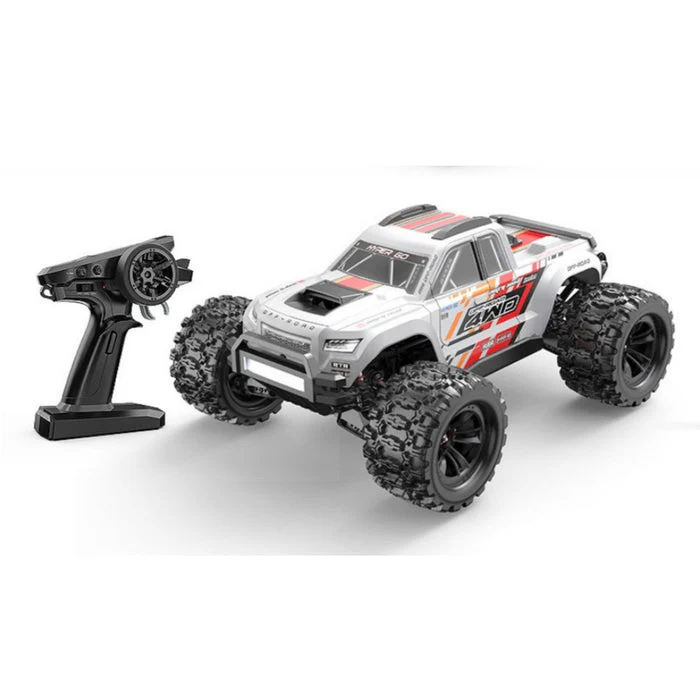
Best electric starter: MJX Hyper Go 10208 V2
1:10 brushless 4WD, ~£230, 80 km/h top speed. Everything you need in the box. See our best RC car for beginners guide for alternatives.
MJX Hyper Go 10208 V2 80KPH+ Brushless RTR 1:10 Scale Truck (White)View details →
Best nitro starter (if you’re sure)
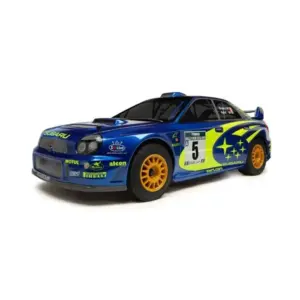
Look at the HPI, Kyosho and Maverick 1:10 nitro rally cars in our rally cars and buggies categories. £350-£500 entry point. Don’t buy the cheapest nitro you can find — tuning a budget engine is a genuinely frustrating first experience.
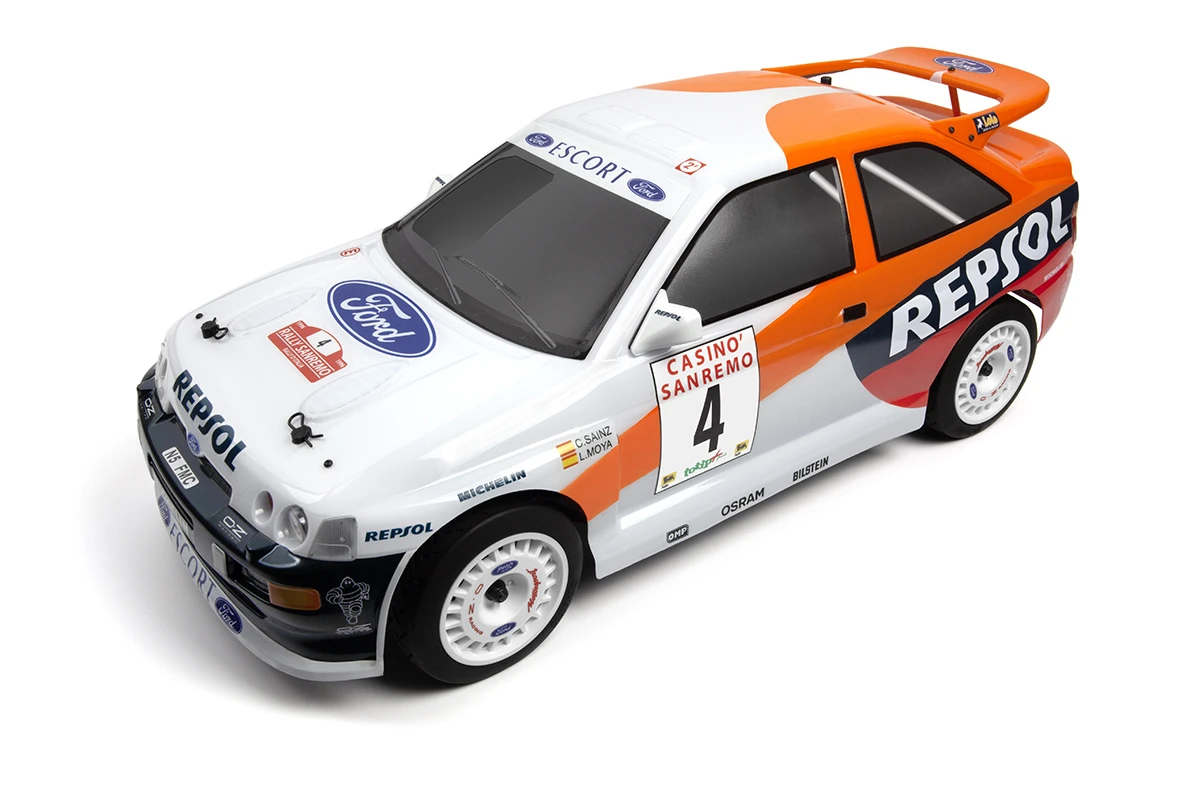 HPI Racing WR8 3.0 1996 Ford Escort RS Cosworth (Nitro)View product →
Frequently asked questions
Is nitro faster than electric?
Not any more. A similarly-priced electric brushless car will usually match or beat an equivalent nitro on top speed and beat it on acceleration. Nitro’s advantage is sound and mechanical feel, not raw speed.
Is nitro more fun?
Subjective. Drivers who love engines think so. Drivers who just want to drive usually prefer electric once they’ve owned both.
Is electric cheaper over time?
Yes, by a substantial margin. Year-one running costs are typically 40-60% lower for electric; over three years the gap widens further.
Can I convert a nitro car to electric?
Technically yes — conversion kits exist for most popular platforms — but by the time you’ve bought the motor, ESC, battery and mounts, you’ll have spent as much as a dedicated electric car. Not recommended unless you really want to keep a specific chassis.
Do electric RC cars have the same runtime as nitro?
Roughly yes, with modern high-capacity LiPo packs. Both sit in the 15-25 minute range for typical 1:8/1:10 bashing. Swapping a battery is faster than refilling a tank.
Is nitro safe for kids?
Kids can drive nitro cars safely, but the hot exhaust, fuel handling and maintenance side is adult-territory. Most under-14s are better served by an electric RC.
Can I run nitro in my garden?
Legally, usually yes, but practically, no — the noise will upset neighbours within a couple of hundred metres. Nitro is best run at dedicated tracks or on open farmland with no housing within earshot.
What fuel do nitro RC cars use?
They use a purpose-built “glow fuel” — a mix of methanol, nitromethane (usually 16-25% for cars), and oil. You don’t use petrol. Glow fuel costs ~£40 per quart and is sold in RC hobby shops, not petrol stations.
Shop RC cars — electric and nitro

Final call
Start with electric. If in three years you’ve fallen in love with the hobby and want to experience the engine side, buy a nitro as a second car. For the large majority of RC drivers in 2026, electric is simply the better tool for the job.
Independent, UK-focused guides to every kind of RC car, plane and helicopter — browse all RC buying guides →